
I live in a typical Indian neighbourhood where almost every house has the same story. A young person finishes college, gets a degree, and then spends months — sometimes years — trying to find a job that matches it.
A few years ago, a boy near my home completed his B.Com from a decent college. His family was proud. Like many middle-class parents, they believed the degree would automatically lead to employment.
But after graduation, reality hit hard.
He applied everywhere — private companies, small firms, even entry-level roles. The responses were almost always the same:
“We need someone with skills and experience.”
His degree was real, but it didn’t translate into work.
This is not one person’s problem. It is something India has been facing for a long time — the gap between education and employability.
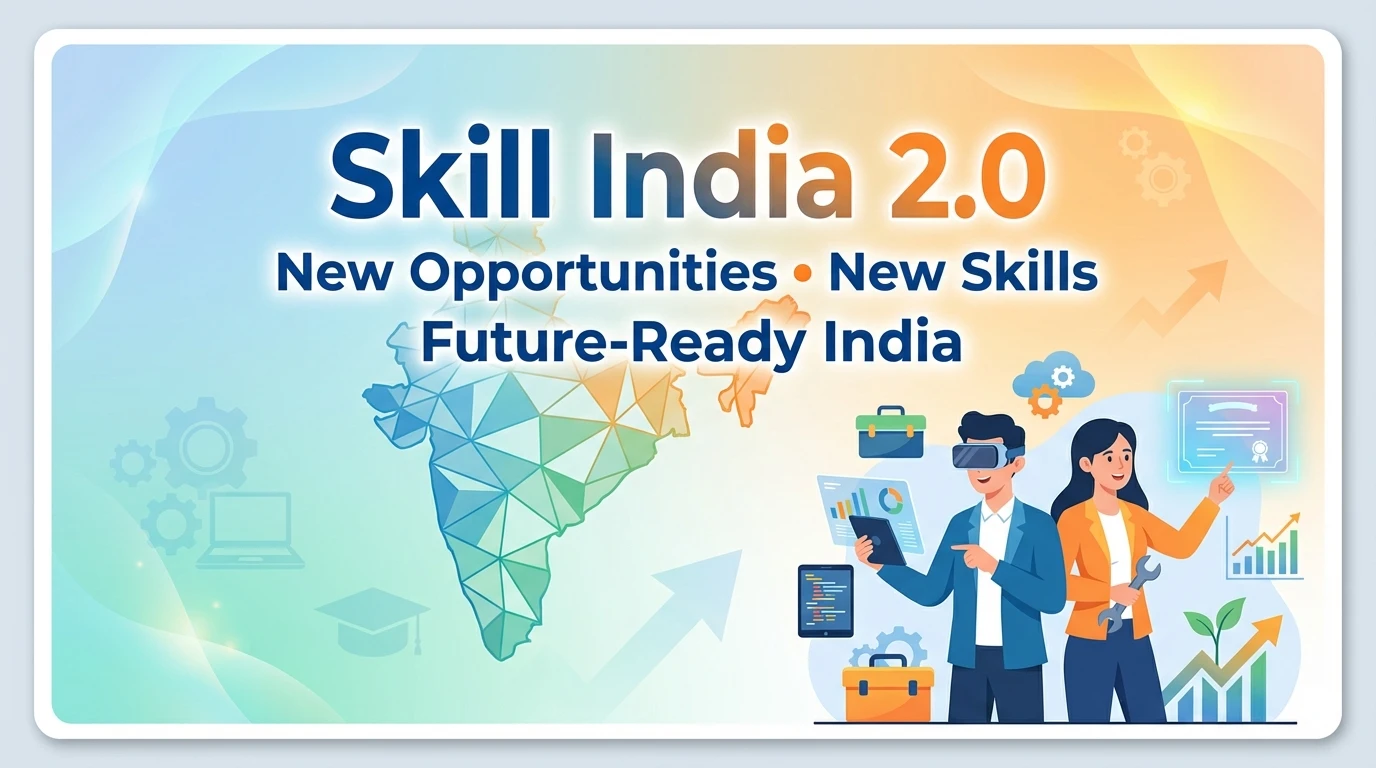
That is where the Skill India Mission comes in.
Why Skill India Was Needed
India produces millions of graduates every year. But many employers still struggle to find trained workers.
On one side, there are young people with degrees who cannot find jobs.
On the other side, industries need people who can actually do the work — technicians, electricians, machine operators, healthcare assistants, digital workers, and many others.
The issue is not always unemployment. Often, it is a skills mismatch.
Skill India was launched to address this gap by creating short-term, practical training programmes that focus on job-ready skills.
What Skill India Actually Does
Skill India is not one single scheme or one training centre. It is an umbrella for multiple initiatives working across sectors.
Some of the key parts include:
1. Upgrading ITIs and Vocational Training
Industrial Training Institutes (ITIs) have existed for decades, but many were outdated.
Skill India pushed for improvements in infrastructure and introduced newer job roles like:
- IoT Technician
- Healthcare Worker
- Solar Panel Installer
- Logistics Assistant
This helped vocational training become more relevant to today’s economy.
2. PMKVY: The Main Training Scheme
The Pradhan Mantri Kaushal Vikas Yojana (PMKVY) is one of the most widely known programmes under Skill India.
Through PMKVY, youth can enrol in short-term courses such as:
- Retail sales
- Beauty and wellness
- Electrical work
- Data entry and digital services
- Hospitality and tourism
The idea is simple: provide affordable training, certification, and support for employment.
3. Industry Involvement
One important improvement has been the involvement of companies.
For example:
- Automobile companies train service technicians
- IT firms support digital skill programmes
- Manufacturing units help design job-specific courses
When industries participate, training becomes more aligned with actual workplace needs.
Real Outcomes: What It Looks Like on the Ground
Skill India has helped many people, but the experience varies depending on location, quality of centres, and family support.
A Positive Case
A young man from Rajasthan who could not clear competitive exams joined a machine operator course.
Within a year, he found stable work in an industrial unit outside Pune.
His income was not extraordinary, but it gave him independence and confidence.
A Common Challenge for Women
In many towns, women complete courses in tailoring, beauty, or healthcare.
But social restrictions still prevent them from working freely.
The skill may be learned, but societal acceptance remains a hurdle.
Upskilling Is Growing Too
Skill development is not only for school dropouts.
Even working professionals are now learning new tools — GST software, digital accounting, or computer skills — to stay relevant.
The Problems Skill India Still Faces
Skill India is important, but it is not perfect.
Some challenges include:
Quality Differences
Not all training centres have good trainers or proper equipment.
In some places, certification becomes more important than actual learning.
Placement Claims vs Reality
Many centres advertise “100% placement,” but the jobs offered are sometimes temporary or low-paying.
Tracking long-term employment outcomes remains difficult.
Awareness in Rural Areas
In villages, many youth still don’t know what courses are available, or courses don’t match local job opportunities.
Mindset Barriers
A major issue is cultural.
Many families still believe:
- Only government jobs matter
- Only degrees bring respect
- Skilled trades are “small work”
Changing this mindset takes time.
Where Skill India Is Headed Now
The mission is evolving with the economy.
Future focus areas include:
- Skills for gig work and digital jobs
- Recognition of prior learning for experienced workers
- Training aligned with international job markets
This is important because the nature of work is changing fast.
Conclusion: Skills as a Practical Path Forward
Skill India may not solve unemployment overnight, but it plays a necessary role.
India cannot rely only on degrees.
We need people who can build, repair, operate, design, manage, and deliver real services.
A degree may open a door, but skills keep you employed.
For many young Indians, Skill India is not about ambition or slogans — it is about finding a realistic way to earn, grow, and move forward.
The mission still has flaws, but it has also created opportunities for millions who would otherwise be left behind in the gap between education and work.