
I grew up in Lucknow, hundreds of kilometres away from the sea. For most people around me, the ocean was not something we thought about. It was something you saw once on a trip to Mumbai or Goa, clicked a few pictures, and came back home.
India has always been like that. We are a country surrounded by water on three sides, yet our major cities and our economic imagination stayed firmly inland. Delhi, Patna, Kanpur, Hyderabad — our centres of power were never coastal. Ports existed, but mostly as endpoints, not as engines of growth.
For a long time, the sea was not seen as opportunity. It was simply geography.
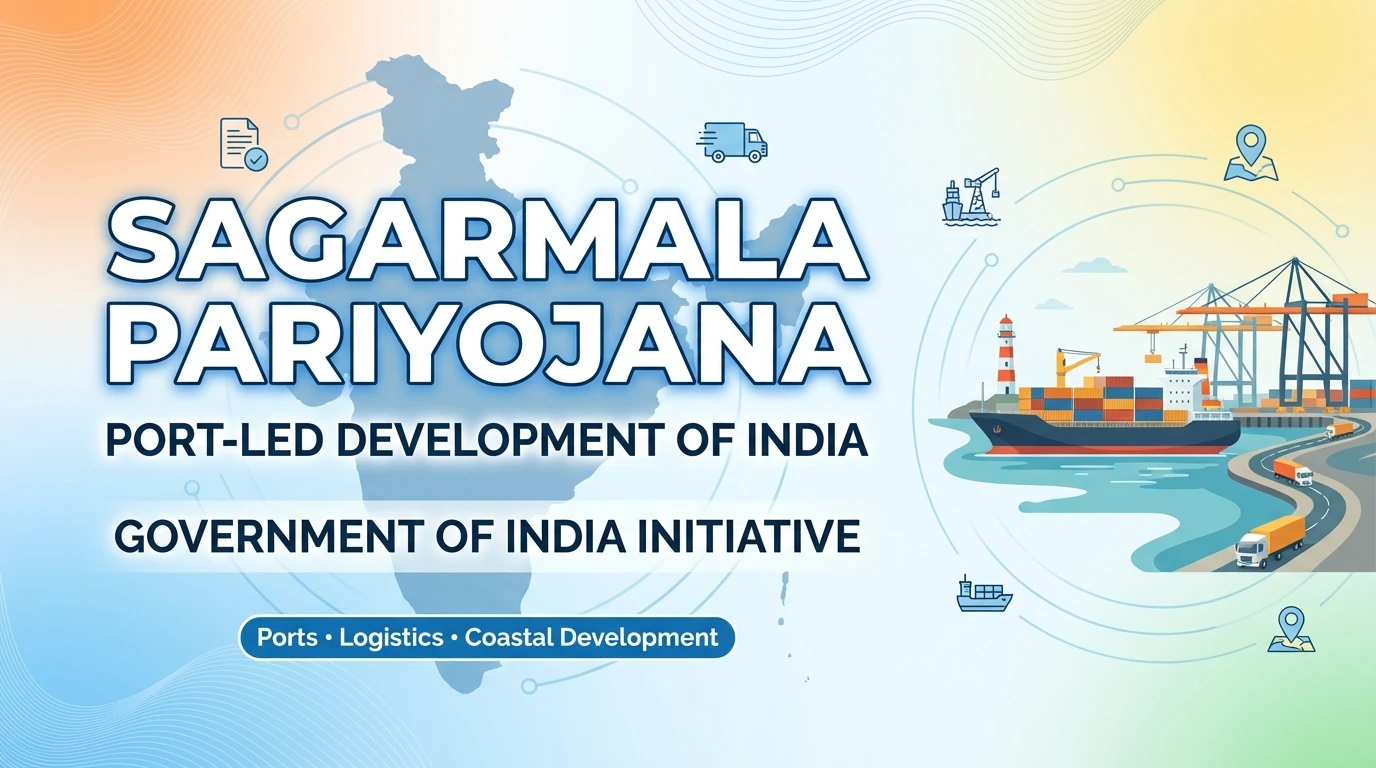
That’s why Sagarmala, launched around 2015, matters. Not because it is about building ports, but because it represents a shift in how India thinks about trade, transport, and development.
The Real Problem Was Never the Ocean — It Was the Cost of Moving Goods
Most Indians don’t realise how much money is lost simply because transporting goods inside the country is expensive.
Think about something as ordinary as a smartphone or cooking oil.
Many of these products enter India through ports like Chennai, Mundra, or JNPT. But once the container arrives, the real delay begins:
- Ships often wait hours or days before docking
- Cargo sits in port yards because space is limited
- Trucks spend long hours just trying to exit port areas due to city congestion
- Goods then travel hundreds of kilometres inland by road
By the time raw material reaches a factory, logistics has already added a significant cost.
India spends roughly 14% of its GDP on logistics, much higher than countries like the US or Germany. That extra cost ultimately shows up in the price you pay as a consumer, and it makes Indian exports less competitive.
Sagarmala was designed to address exactly this.
What Sagarmala Is Actually Trying To Do
Sagarmala is often described as a “port-led development programme,” but the idea is broader.
The plan rests on four main areas:
1. Modernising Ports, Not Just Expanding Them
India has ports, but many of them were not built for modern global shipping.
One example often discussed is Vadhavan Port in Maharashtra, which is planned as a deep-draft port capable of handling large container vessels.
Right now, many big ships don’t dock directly in India. Cargo is often routed through trans-shipment hubs like Singapore or Colombo first, which adds time and cost.
The goal is simple: Indian ports should be capable enough that global trade routes don’t bypass us.
Sagarmala also pushes for port specialisation — allowing each port to focus on what it handles best, rather than every port trying to do everything.
2. Fixing Connectivity Between Ports and Industry
A port cannot function efficiently if goods take hours just to move out of it.
Sagarmala includes projects that improve:
- Rail connectivity from ports to freight corridors
- Better road links that avoid city bottlenecks
- Coastal shipping as an alternative to long road transport
A practical example is the Ro-Ro service between Ghogha and Dahej in Gujarat, which allows trucks to cross by sea instead of driving long distances by road.
Such services save fuel, reduce congestion, and show how coastal shipping can become a real logistics option.
3. Developing Coastal Economic Zones
One of the most important ideas under Sagarmala is this:
Why should factories be located far inland if their raw materials and exports move through ports?
Coastal Economic Zones (CEZs) aim to create industrial clusters close to ports, so that:
- Imports arrive directly into nearby factories
- Finished goods can be exported quickly
- Transport costs are drastically reduced
This is how many export-driven economies have grown — by integrating ports with manufacturing.
4. Including Coastal Communities
Large port projects often impact fishing communities and fragile coastal ecosystems.
Sagarmala includes components for:
- Skill training for coastal youth in logistics and port jobs
- Modernisation of fishing harbours with cold storage and better infrastructure
- Tourism development in some coastal regions
However, community concerns remain real. In states like Kerala, protests have shown that development cannot succeed without trust, transparency, and proper rehabilitation.
Challenges on the Ground
Sagarmala’s vision is ambitious, but implementation is not easy.
Port projects require dozens of approvals — environment, coastal regulation, defence, forestry, and more. Coordination across ministries is slow.
There is also the risk of states competing with each other by building similar mega-ports, rather than focusing on complementary development.
Sagarmala will only work if it creates new economic activity, not just redistributes existing cargo.
Paradip: A Glimpse of What Port-Led Growth Can Look Like
Paradip Port in Odisha is often cited as an example of improvement.
It has become one of India’s top cargo-handling ports, and industrial activity around it has increased — including sectors like plastics, seafood processing, and logistics services.
For local employment, this matters. Ports are not just infrastructure — they can become ecosystems that generate jobs and investment.
Conclusion: India’s Coastline as an Economic Advantage
India is not a landlocked country. We are a peninsula with one of the longest coastlines in the world.
Sagarmala is essentially an attempt to use that geography intelligently — to reduce logistics costs, improve trade competitiveness, and connect coastal development with national growth.
The success of Sagarmala will not be measured only in new terminals or dredged channels.
It will be measured in whether moving goods becomes cheaper, whether exports become easier, and whether coastal communities also benefit from the change.
For decades, India looked inward. Sagarmala is one of the first serious efforts to look outward — towards the sea — and build an economy that finally uses the coastline not as an edge, but as an asset.