
I want you to remember the smell. Walk through any Indian city in 2014—and your nose would tell you a story our statistics hid. The sweet-rotten stench of overflowing community bins. The sharp ammonia tang from public urination corners. The damp, decaying odor from clogged drains. We had learned to live with it. We held our breath, crossed streets, and accepted filth as our civic destiny.
Then came 2014 and that now-iconic broom. Swachh Bharat Abhiyan (Urban) was launched with a target that seemed almost naive: making urban India open defecation free (ODF) in five years. And against all odds, by 2019, we declared victory. Cities built over 66 lakh individual household toilets and 6 lakh community toilets. But here’s the uncomfortable truth everyone in the municipal world knew: Building a toilet is easy. Maintaining a sanitation system is the real battle.
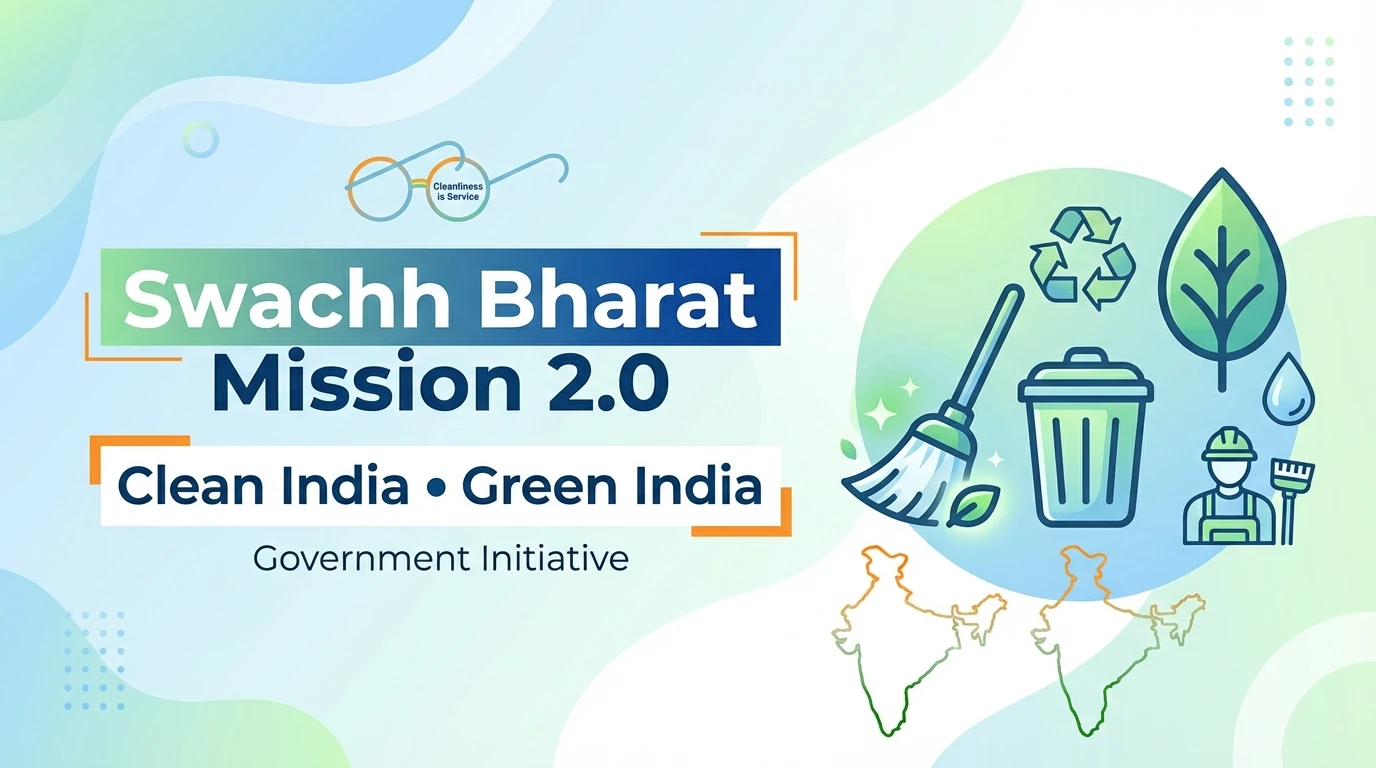
That’s where Swachh Bharat Mission-Urban 2.0 (2021-2026) comes in. This isn’t Phase 2. This is a completely different game. If SBM 1.0 was about hardware (toilets), SBM 2.0 is about software (sustainability). If the first mission asked, “Is there a toilet?” the second asks, “Is the toilet usable, is the waste treated, and does the entire chain work?”
The Unspoken Failure of ODF: What Happened After the Banners Came Down
My cousin, a civil engineer in Ghaziabad, told me a story in 2020. His municipality had proudly declared ODF status. Yet, he was tasked with unclogging a community toilet block’s septic tank. It hadn’t been emptied in two years. The fecal sludge had nowhere to go, so it was illegally dumped into a stormwater drain, which flowed into the very river the city was trying to clean.
This was the dirty secret of SBM 1.0. We created toilets without a plan for shit. We solved for access, but not for the entire sanitation value chain. SBM 2.0 looks at this chain with brutal clarity:
- Containment (A toilet with a tank)
- Emptying (A service to empty that tank)
- Transport (A vehicle to take the waste away)
- Treatment (A plant to process it)
- Reuse/Disposal (Turning waste into water, compost, or energy)
The first mission stopped at Step 1. The second mission is obsessed with Steps 2 through 5. Its new slogan should be: From ODF (Open Defecation Free) to ODF+ (Open Defecation Free Plus).
The Three Pillars of SBM 2.0: Beyond the Broom
1. Wastewater Treatment & Fecal Sludge Management: The “End of the Pipe” Problem
This is the most critical, least glamorous shift. SBM 2.0 mandates that no human waste should be discharged untreated into the environment. This means:
- Building Sewer Networks in smaller, unsewered cities.
- Fecal Sludge Treatment Plants (FSTPs): For areas without sewers, these are the game-changers. Vacuum trucks (called ‘honey-suckers’) empty septic tanks and take the sludge to these plants. Here, it’s treated into safe water and compost. The goal is to have an FSTP within every city’s reach.
- The ‘Used Water’ Revolution: SBM 2.0 reframes wastewater as ‘used water,’ a resource. Treated water is to be reused for gardening, industrial cooling, or replenishing lakes.
2. Solid Waste Management: From Landfill Mountains to a Circular Economy
Remember the towering, smoking garbage dumps at the edge of your city? SBM 2.0 wants to make them history. The focus is on source segregation—the simple act of separating wet (kitchen) waste from dry (plastic, paper, metal) waste at your home.
- Wet Waste → Compost/Biogas: Instead of festering in a landfill, your vegetable peels can become compost for parks or fuel for cooking.
- Dry Waste → Recycling: Plastics, metals, and paper get a second life.
- The “3R” Mantra: Reduce, Reuse, Recycle. The mission pushes for Material Recovery Facilities (MRFs) in every ward to sort and channel waste correctly.
3. Plastic Waste Management & Air Pollution Control
This is where SBM 2.0 gets contemporary. It tackles the new-age pollutants:
- Ban on Single-Use Plastics (SUPs): Aligning with national policy, cities are mandated to eliminate SUPs and establish systems to collect and recycle plastic waste.
- Managing Construction & Demolition (C&D) Waste: The dust from endless construction is a major air pollutant. SBM 2.0 pushes for C&D waste plants that crush old concrete and bricks into material for new roads and pavements.
The On-Ground Reality: The Good, The Bad, and The Smelly
The Success Story: Indore
Indore didn’t just win the ‘Cleanest City’ title; it built a model. It processes 100% of its wet waste into compost. It has a robust network of FSTPs. It monetizes waste—selling compost, recycling plastic. The key? Private sector participation and citizen involvement through Swachhata Apps. They made cleanliness a civic pride issue, not just a municipal duty.
The Ongoing Struggle: The Financial & Behavioral Hurdle
In many smaller cities, the challenge is twofold:
- Who Pays? Building a sewer network or an FSTP is capital-intensive. User charges (like higher property tax) are unpopular. The central government funds a portion, but states and municipalities must find the rest.
- Who Behaves? Convincing a housing society to segregate waste, or a restaurant owner to pay for regular septic tank cleaning, requires a change in mindset. Old habits of throwing everything into one bin or one drain die hard.
The Citizen’s New Role: From Bystander to Stakeholder
SBM 1.0 was a government-driven “Abhiyan” (campaign). SBM 2.0 has to be a citizen-driven “Andolan” (movement). The tools are there:
- Swachhata Apps: To complain about garbage piles, broken manholes, or non-emptied community toilets.
- Waste-Wise Workshops: To learn composting at home.
- Plastic Collection Drives.
The mission’s success now depends on you. Will you segregate your waste? Will you pay a small fee for septic tank emptying? Will you report the illegal dumping you see?
Conclusion: The Long Road from Clean to Swachh
The first mission gave us a clean slate. The second mission is about writing a sustainable future on it. The metric of success is no longer just toilet count. It is:
- Percentage of wastewater treated.
- Tonnes of waste diverted from landfills.
- Number of cities with 100% source segregation.
It’s a harder, more complex, and less photogenic fight. You can’t take a selfie with a well-functioning fecal sludge plant. But you can breathe the cleaner air, walk by the cleaner drains, and live in a city that doesn’t just look clean, but is systemically clean.
Swachh Bharat 2.0 understands that true cleanliness isn’t a one-time sweep. It’s a daily discipline, a functional system, and a shared responsibility. The broom was just the beginning. Now, we need the blueprint, the budget, and the unwavering public will to see it through. The mission continues, quietly moving from eliminating shame to engineering sanity.