
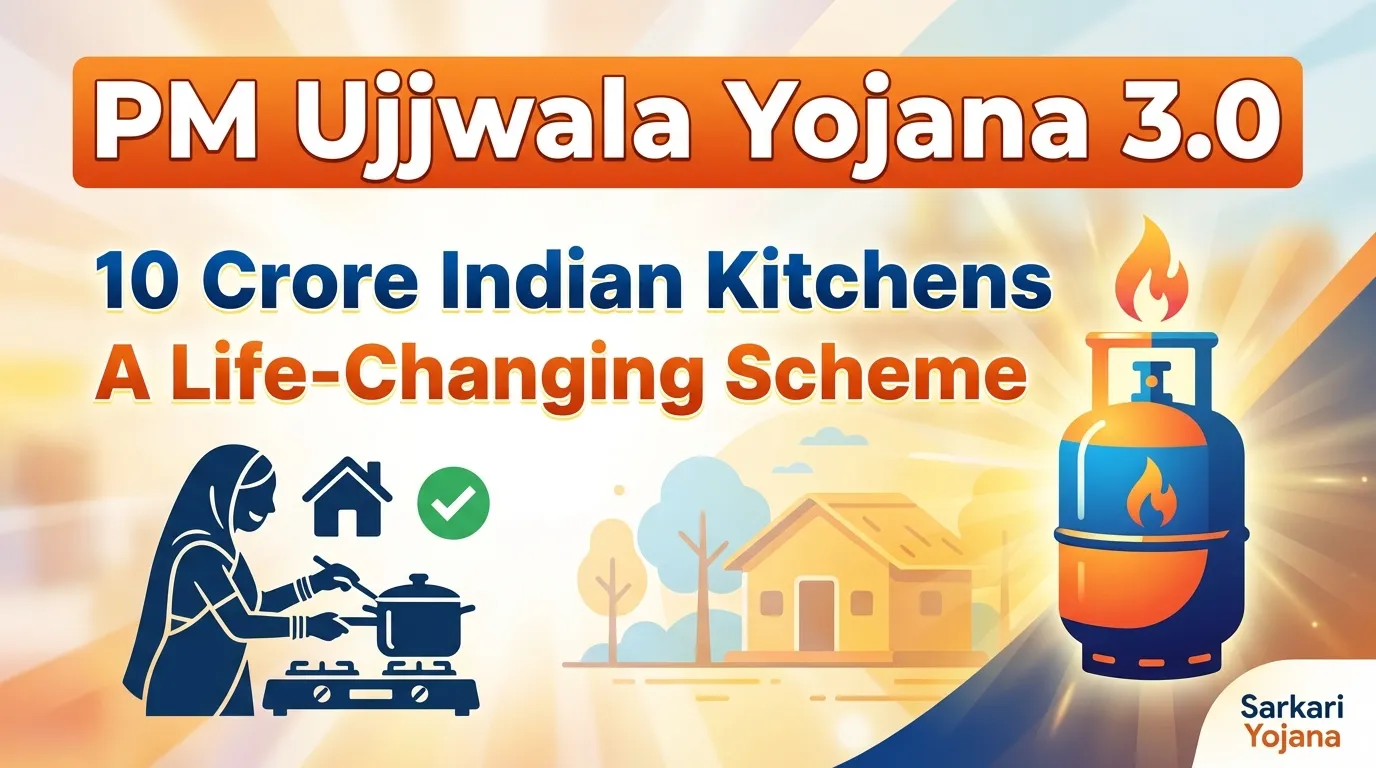
You know what my earliest memory of my grandmother’s kitchen is? The chulha. Not the warmth, not the food—but her cough. A deep, rattling cough that would shake her tiny frame every time she blew into the smouldering wood to keep the fire alive. We called it her “cooking cough.” We thought it was normal. Almost every woman in our mohalla had it.
Then, around eight years back, something changed. First in my mausi’s house in the village. A bright blue cylinder appeared in her kitchen, like an alien spaceship had landed. “Laxmi aayi hai,” she whispered, as if the gas stove was a goddess. She touched it like it might disappear. That cylinder had a name written on it: Ujjwala.
But let’s be clear. Ujjwala was never about a gas connection. That’s like saying a smartphone is about making calls. Ujjwala was about interrupting a curse that was passed down with wedding jewellery—the curse of smoke-filled lungs, bent backs, and days measured in bundles of firewood.
The Three Battles of Ujjwala: Promise, Problem, and Pivot
Every good story has conflict. Ujjwala’s wasn’t against kerosene. It was against reality.
Battle 1: The Promise (2016-2018)
The math was simple, almost poetic. Give a woman a cylinder, save her life. Indoor air pollution was killing more Indians than malaria. The government would bear the cost of the connection (about ₹1600 back then). The woman just had to bring her Aadhaar card and her hope. And they came. In lines longer than for temple prasad. For the first time, a government scheme was asking for her name, not her husband’s or father’s. That was the magic trick. The subsidy would go to her bank account. She was now the financial head of the kitchen. You can’t put a price on that feeling.
Battle 2: The Problem (The Empty Cylinder in the Corner)
This is the part the shiny brochures don’t show. By 2019, a strange sight was common in villages. The proud blue cylinder, now gathering dust in a corner. The “Laxmi” was locked. Why? Because the first refill cost ₹900. For a family surviving on daily wages, that was a week’s food. So, the cylinder became a trophy for special occasions—a wedding, a festival. The chulha was still the daily breadwinner. Critics pounced. “Scheme failed,” they declared. “They got the connection but can’t afford the gas.”
Battle 3: The Pivot (Listening to the Whisper)
This is where the real story is. The government didn’t just abandon the scheme. They heard the whisper from those empty kitchens. They started tinkering.
- Targeted Subsidy: Instead of a flat discount, money started going directly to the woman’s bank account before she went for a refill.
- Pandemic Lifeline: During COVID, under PM Garib Kalyan, they gave free cylinders for months. My mausi cried on the phone. “They remembered us.”
- Ujjwala 2.0 (2021): They went after the left-out people—migrant workers with no papers, families in no-man’s land. Paperwork was cut. Portability was added. Your connection could move with you, from village to city.
The battle shifted from access to sustained use. It’s still being fought today, every time the global LPG price jumps.
The Unwritten Benefits: What the Data Can’t Capture
The official website will give you numbers—10 crore connections, X% coverage. But sit in a Ujjwala kitchen and ask:
- “What did you do with the time?” My cousin’s wife in Odisha said: “I got two hours back. I used one to rest. The other, I started stitching blouses. I earn ₹500 a month now. That’s my money.”
- “What changed for your children?” The teacher in a UP primary school told me attendance of girls improved. They weren’t needed to gather wood before school.
- “What does it smell like now?” This was the most profound answer I got. “My hair doesn’t smell of smoke when I go to the market. I feel… clean.”
Who Actually Got It? (Eligibility Beyond the Form)
The form lists: SC/ST, PMAY beneficiaries, tea garden tribes, forest dwellers. On the ground, it was the panchayat’s wisdom. They knew who the truly poor were—the widow no one talked about, the rickshaw-puller’s wife with four kids, the old woman living alone. The local LPG dealer became a social worker, identifying homes still shrouded in morning smoke.
The Application: A Human Chain, Not a Portal
Forget “Apply Online.” For most Ujjwala beneficiaries, the form came to them. The Anganwadi didi filled it for them. The ration shop owner guided them. The LPG distributor’s boy came on a bicycle with a stack of forms. This was a scheme delivered by people, not just portals. The verification was a conversation, not just a database check.
The Irony and The Truth
The ultimate irony? Ujjwala’s biggest proof of success is the anger around refill prices. When LPG prices rise, the loudest protests come from Ujjwala women. Ten years ago, they were invisible. Today, they are a voting bloc demanding their right to affordable gas. That’s empowerment. They’ve moved from being beneficiaries to being stakeholders.
Conclusion: Not a Cylinder, But a Companion
That blue cylinder in my mausi’s kitchen? It’s not in the corner anymore. It’s central, decorated with a sticker of Ganesha. The old chulha is outside now, used to heat water for baths.
Ujjwala’s real victory isn’t in replacing firewood. It’s in the subtle shift of status. It told crores of Indian women: “Your time has value. Your health is wealth. Your name matters.”
The last time I visited, my mausi was teaching her granddaughter how to light the stove. “Always check the knob twice,” she said. Not out of fear, but out of ownership. She wasn’t just passing on a cooking lesson. She was passing on the key to a kitchen where the air is clear, and the future doesn’t have to smell of smoke.
The revolution wasn’t televised. It was cooked, one silent meal at a time.